
Group Leader

Luis-Felipe Rodríguez I am a full professor in the Department of Computer Science & Design at Instituto Tecnológico de Sonora, México. My research areas include computational modeling of emotions for
virtual agents, cognitive agent architectures, affective human-computer interaction, decision support systems, among others. I am member Level-I of the SNI-Conacyt (National System of Researchers) since 2015.
ORCID:
https://orcid.org/0000-0001-8114-0299
Google Scholar: https://scholar.google.co.uk/citations?user=IQRBs04AAAAJ&hl=en
PhD students
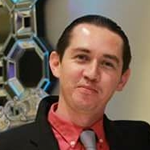
Omar López Chávez is working on a VR platform for simulating smart agents in 3D virtual scenarios. The main objective is to develop an agent-based framework, generating scenarios with objects and
agents in order to create 3D simulations with VR.
Thesis: Virtual Reality Platform with Intelligent Virtual Agents for Affective Interaction.
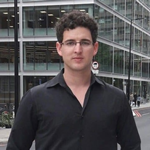
Sergio Castellanos Bustamante is working on projects concerning the computational modeling of emotions, advancing in the understanding of how emotions bias cognitive processes of the brain. His
main interest is to define those deterministic functions that describe the relationship between the factors that influence the emotional process (e.g. personality or social norms), through simulations with virtual
reality.
Thesis: Emulating the bias caused by factors that influence the emotional evaluation process in intelligent agents.

Eduardo Javier Islas Cota is working on the design and development of a Intelligent Assistant to provide social support to informal caregivers of people with Alzheimer's and related dementias to
maintain stable levels of perceived overload.
Thesis: Effects of an Intelligent Assistant on the perception of social support and overload in caregivers of people with Alzheimer's and related dementias.

Enrique Osuna Cuen is working on a formal methodology for the development of computational models of emotions (CMEs). Specifically, he is making an intersection of affective computing and software
engineering to create such methodology. The main objective is to facilitate the CMEs development process with the help of software engineering practices.
Thesis: A formal software methodology for the development of computational models of emotion of artificial virtual agents in human-computer interaction scenarios.
MSc Students

Tania Arisdelci Barreras Díaz is working on the design and evaluation of a platform that is suitable for use as a decision support tool in different day centers that attend to patients with
Alzheimer's.
Thesis: BI solution to support decision-making and analysis of the evolution of Alzheimer's patients in day centers.

Jesus Jose Gonzalez Vazquez is working on the design and development of a virtual driver's persuador that will analyze the driver's behavior and provide conversational recommenation or try to
persuade depending on the driver's behaviors.
Thesis: virtual intelligent driver's persuader system.
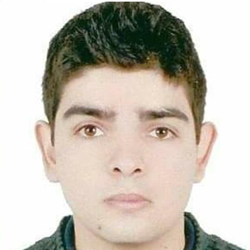
Marco Antonio Esquer Rochin Is working in day centers for Alzheimer's patients developing a visualization tool, that helps health professionals understand the progress of the disease and support
their decisions to adapt an appropriate treatment to each patient.
Thesis: Design and evaluation of a visualization tool for the analysis of the progression of patients with Alzheimer's disease in day centers.